Don't Fall in Love With the House Before You Check the Property: What Every East Texas Homebuyer Needs to Know
That beautiful East Texas house may catch your eye, but what you can't see at first glance could make all the difference.
Let's be honest. We've all seen a home that makes us stop scrolling. Maybe it's the beautiful farmhouse kitchen, the big front porch, the acreage out back, or that perfect spot under the trees where you can already picture yourself drinking coffee in the mornings.
And there's nothing wrong with falling in love with a property! That's part of the excitement of buying a home.
But here's something every homebuyer needs to remember, especially when shopping for homes with acreage, country homes, or rural property in East Texas: There's a whole lot more to buying real estate than how pretty a property looks.
A beautiful home can still come with drainage problems, questionable road access, unexpected utility expenses, restrictive easements, or land-use issues that you never noticed during your first showing.
Here in the East Texas Piney Woods, where properties can range from established neighborhoods to secluded country homes and large tracts of land, looking beyond appearances isn't just a good idea. It's an important part of making an informed real estate decision.
At Country Roots Realty, Melissa Summers believes buying property should be about more than finding something you love today. It's about understanding what you're buying and protecting your investment for the future.
So before you fall head over heels for that next property, let's talk about some things worth looking into.
1. Where Does the Water Go When It Rains?
This is a big one in East Texas!
We get our fair share of rain, and a property that looks perfectly fine on a sunny afternoon can tell a completely different story after a heavy downpour.
Low-lying areas, poor drainage, standing water, and runoff from neighboring properties can all create problems for homeowners. Water may collect in the backyard, flow toward the home's foundation, wash out a driveway, or leave portions of the land too wet to use as you intended.
And don't assume that because a property isn't located in a mapped flood zone, it can't experience flooding or drainage issues. (Most of Panola County is not FEMA flood mapped!)
Before purchasing a home or land in East Texas, pay attention to the property's elevation, the direction water naturally flows, any visible signs of erosion, and whether there are areas that stay wet long after a rain.
If you're buying acreage, think about how much of that land is actually usable. Ten acres may sound wonderful, but if several acres remain wet or inaccessible for much of the year, that could affect how you enjoy and use the property.
It's also wise to investigate applicable flood maps, drainage concerns, and available flood insurance information when appropriate. Elevation certification may be a good option to have done by a professional.
A pretty yard is great. A yard that drains properly is even better.
2. Does the Property Have Legal Access From a Public Road?
A driveway leading to a house doesn't automatically mean you have the legal access you need.
This is especially important when buying land, wooded acreage, or property located off a private road in Panola County and the surrounding East Texas communities.
Some properties have direct frontage on a public road. Others rely on private roads, shared driveways, or recorded access easements across another person's property.
That distinction matters.
You need to understand whether the property has legally established access, who maintains the road.. if anyone, whether access rights are properly documented, and whether any restrictions could affect your ability to reach or develop the property.
A road may have been used by the current owner and neighbors for decades, but that history alone doesn't necessarily establish the legal rights a future owner needs.
If you're purchasing vacant land with plans to build, don't assume that being able to drive onto the property means you have everything necessary to build a home or obtain the permits you may need.
Road access is one of those details that can be easy to overlook until it becomes a very expensive problem.
3. Are All the Utilities Available — and What Will It Cost to Get Them?
When you see a beautiful home tucked away in the country, it's easy to picture yourself already there.
Questions worth asking before you commit though may include:
Is electricity already connected to the home or available at the intended building site?
Is the property served by public water, a private water well, or another water source?
Does the property have a septic system, and what is known about its condition and suitability?
Is public sewer available, or will an approved on-site wastewater system be needed?
Is reliable internet service available for working from home, streaming, or everyday use?
Are there gas service options if they're important to your plans?
And here's something buyers sometimes discover too late: A utility being available nearby doesn't necessarily mean connecting to it will be simple or inexpensive.
Extending electrical service across a large tract, drilling a water well, installing a septic system, or bringing other services to a homesite can add significant costs to a purchase.
If you're buying vacant land, ask these questions before assuming you can build exactly what you want, where you want it.
A little research before closing can help you avoid some unpleasant surprises afterward.
4. Are There Oil and Gas Well Pads, Pipelines, or Other Energy Operations?
This is another important consideration when buying rural real estate in East Texas.
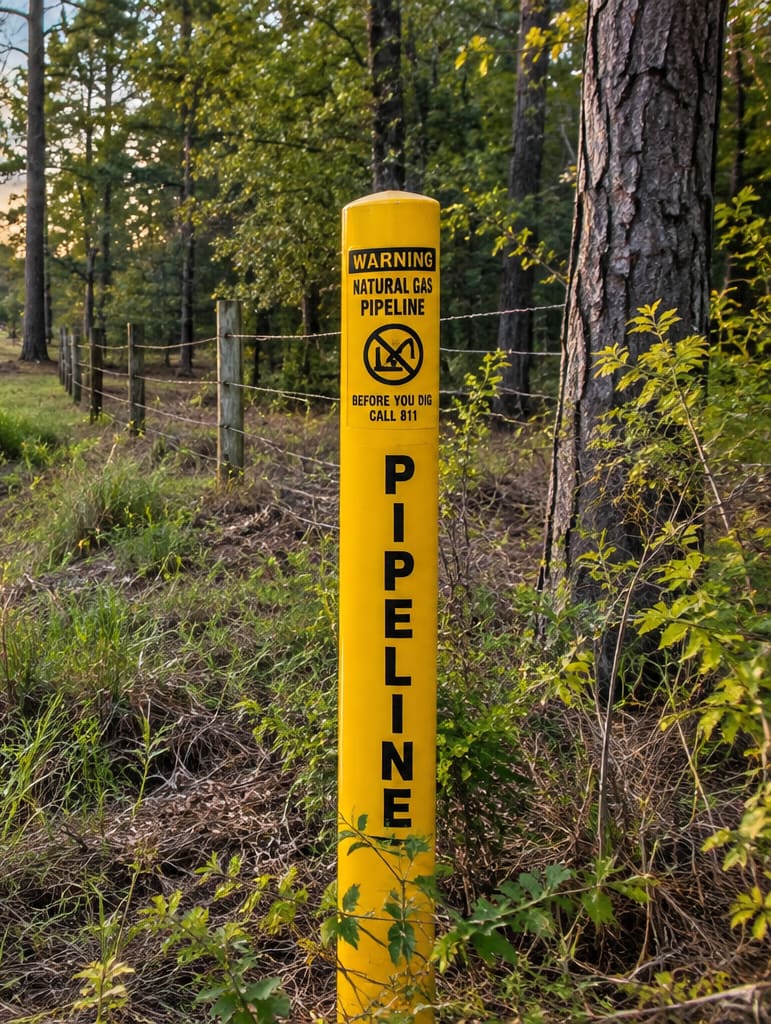
Depending on the location, a property may have an existing oil or gas well pad, pipeline infrastructure, access roads serving energy operations, or other related facilities on or near the land.
These features aren't automatically a dealbreaker. For some buyers, they may have little impact on their plans. For others, they could significantly affect where they build, how they use their acreage, or how much privacy they enjoy.
The key is understanding what is there before you buy.
Look for visible well sites, pipeline markers, access roads, equipment, and signs of existing operations. Ask questions about known oil and gas activity and investigate the relevant recorded documents and available property information.
Also, don't assume that a pipeline is absent simply because you can't see one. Some pipelines are underground, and their locations and associated rights may need to be investigated through available records and appropriate professional resources.
Knowing what exists on a property can help you make a decision based on facts rather than appearances.
5. Easements, Rights-of-Way, and Leases: What Rights Come With the Land?
Now we're getting into the details that may not be visible during a property tour but can have a real impact on ownership.
When you buy real estate, you're not just buying the house, trees, and dirt. You also need to understand whether other people or companies have certain legal rights involving the property.
Here are a few terms worth knowing.
Easements: An easement may give another party the right to use a specific portion of a property for a particular purpose. This could involve utilities, drainage, access, or other permitted uses.
Rights-of-way (ROWs): A right-of-way may allow a utility provider, pipeline operator, road authority, or another authorized party to access or use a defined area of the property, depending on the applicable rights and documents.
Leases: Depending on the property, there may be existing oil and gas leases, agricultural leases, hunting leases, or other agreements that affect how the land is used or who has certain rights.
Why should you care?
Because that quiet corner of the property where you planned to build a workshop might be affected by an easement. The wooded acreage you imagined enjoying in complete privacy might be subject to an existing lease. A utility or pipeline right-of-way could affect where you can place improvements.
The existence of an easement or lease doesn't necessarily mean the property is a bad purchase. What matters is understanding its location, terms, duration, and practical impact.
Reviewing the title commitment, recorded instruments, surveys, and applicable agreements with the appropriate professionals can help identify potential restrictions before closing.
Never assume that because a property looks private and unrestricted, there are no existing rights or agreements affecting it.
6. Don't Skip the Survey, Title Review, or Property Boundaries
A fence is helpful, but it doesn't automatically establish the legal boundary of a property.
This is particularly important when buying acreage in East Texas, where older fences, wooded tracts, irregular property lines, and neighboring land uses can make boundaries difficult to determine just by looking.
A current survey, when appropriate, can help identify boundary lines, improvements, encroachments, easements, and other features relevant to the purchase.
A title review is also important because it can reveal recorded matters that may affect ownership and use of the property.
Buyers should pay attention to questions such as:
Do the legal description and acreage information match the property being purchased?
Are there known boundary disputes or improvements crossing property lines?
Are there recorded easements, restrictions, or other encumbrances?
Are there access rights or other matters that need clarification?
Are there title issues that should be resolved before closing?
Not every property will have a problem, of course. But understanding the boundaries and reviewing the title are important steps toward knowing what you're actually purchasing.
7. Is the Property Suitable for What You Want to Do With It?
Sometimes a property can be perfectly fine for one buyer and completely wrong for another.
Maybe you want a place to build your forever home. Maybe you want a mini-farm, a place for horses, recreational acreage, a hunting property, or land where you can eventually build another home for family.
Those plans matter.
Before purchasing, consider whether the property can reasonably accommodate your intended use. Investigate applicable deed restrictions, zoning or development requirements where applicable, septic approval, flood or drainage concerns, driveway access, and any restrictions affecting construction or land use.
If you plan to build, confirm that your intended homesite is suitable and investigate any necessary approvals before relying on assumptions.
If you plan to keep livestock, look at fencing, usable pasture, water availability, and access to the areas you intend to use.
If privacy is your goal, pay attention to neighboring properties, nearby roads, existing access rights, and surrounding land uses.
And if you're buying as an investment, think about the property's practical features and potential limitations in addition to its appearance.
Buy for the life you want to live, not just the picture you fell in love with.
8. Look Beyond Today's Condition and Think About Tomorrow
A property may meet your needs today but become less suitable if your plans change.
Think about future maintenance, accessibility, drainage, utility costs, road upkeep, and the property's potential resale appeal.
For example, a long gravel driveway may be perfectly fine until heavy rain makes maintenance a regular chore. A remote homesite may offer wonderful privacy but require a more expensive utility setup. A beautiful wooded tract may be appealing, but clearing a homesite or creating access could cost more than expected.
None of these things automatically make a property a bad investment. They simply deserve consideration before you buy.
The goal isn't to find a property without a single imperfection. That's rarely realistic.
The goal is to understand the property well enough to decide whether its benefits, limitations, and potential expenses make sense for you.
9. Ask Questions Before You Close, Not After
Buying a home is exciting, and it's easy to get caught up in the process. But asking the right questions early can make a tremendous difference.
As you move through the buying process, make time to investigate the property's drainage, access, utilities, boundaries, easements, leases, and other matters relevant to your plans.
Use the available inspection, survey, title review, and contractual processes to investigate concerns. Depending on the issue, you may need help from a surveyor, title professional, inspector, engineer, septic specialist, attorney, or another qualified expert.
No real estate professional can guarantee that every hidden condition or future problem will be discovered. But asking questions, identifying concerns, and knowing when to bring in the right experts are important parts of making an informed purchase.
Don't be afraid to slow down long enough to understand what you're buying.
The right property should be something you feel good about after the excitement of the showing has passed, too.
The Bottom Line: A Pretty Property Isn't Always the Right Property
That beautiful farmhouse, charming country home, or peaceful piece of East Texas acreage may be everything you've been dreaming about.
But before you make an offer, take time to look beyond the surface.
Looking to buy a home or land in East Texas? Contact Country Roots Realty. We'd love to help you explore your options, ask the right questions, and take the next step toward finding a property that's right for you.
Country Roots Realty — Helping you find more than a property. Helping you find your place to put down roots in East Texas.

Hi there! I am Melissa Summers and I am the Broker & Owner of Country Roots Realty located here in the Pineywoods of East Texas. I am happy to help with all your real estate needs.